|
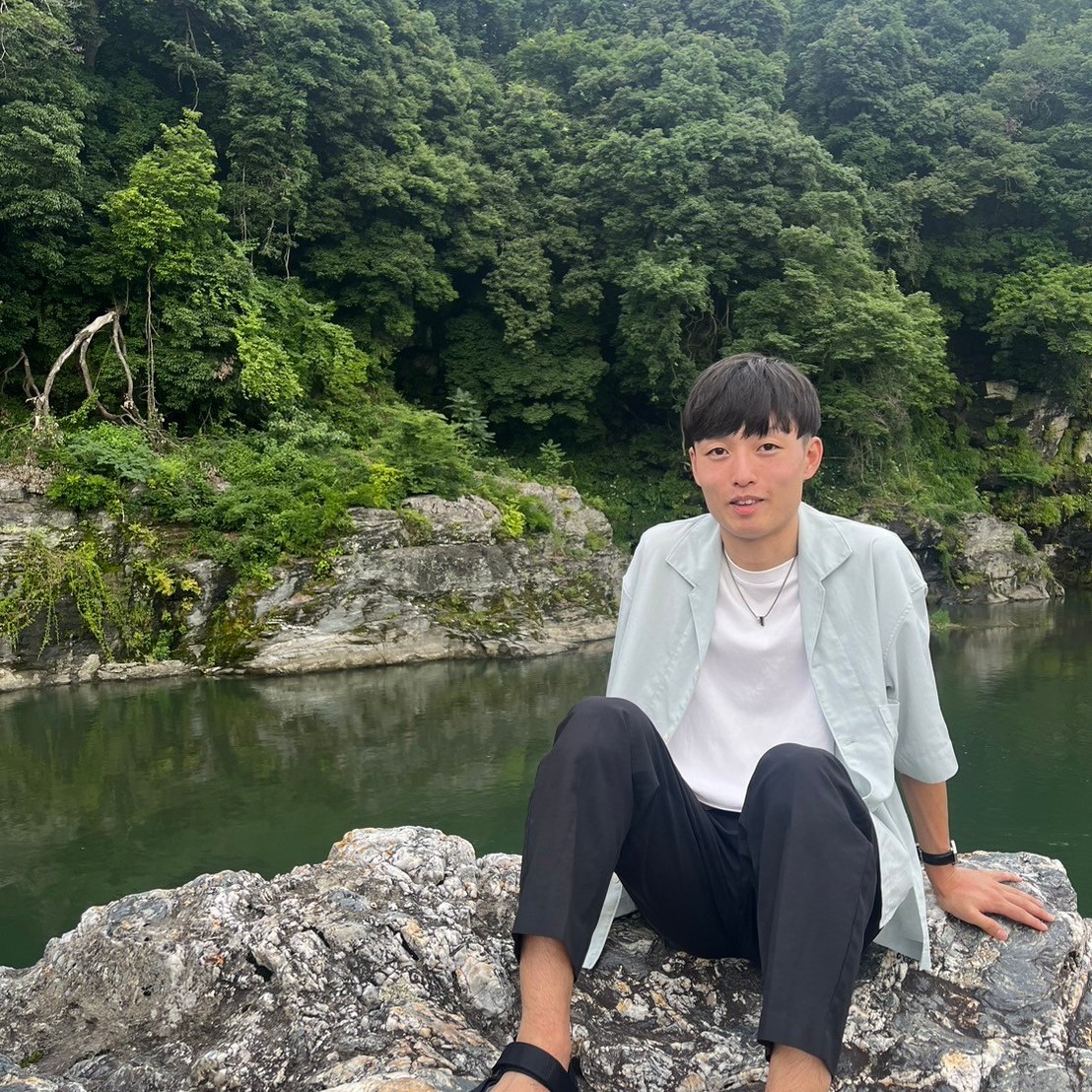
Riku Itsuji I am a Master's student in Prof. Hideo Saito's Laboratory at Keio University, where I work on computer vision and machine learning. From June to September 2026, I am a research associate at Carnegie Mellon University, working with Prof. Min Xu on cryo-EM particle picking. I am interested in taking computer vision across a wide range of applications, from cryo-EM structural analysis to sports video understanding and social robot navigation. Ultimately, my goal is to create a society where humans and AI collaborate seamlessly in all real-world environments. Email / CV / Google Scholar / Github / Hugging Face |
|
ResearchPapers, challenge entries, and projects I am currently working on. Published and submitted papers are highlighted. |
|
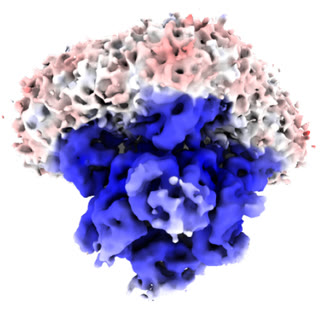
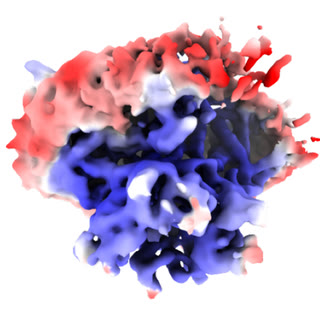
Reconstruction-Aware Cryo-EM Particle Picking
Riku Itsuji, Yuanhao Wang, Xingjian Li, Seonghui Min, Hideo Saito, Min Xu WACV, 2027 (under review) project page / code / data / weights Particle picking, contamination removal, and 2D class selection are usually trained and scored in isolation. Running them as one loop, and scoring the loop by the resolution of the map it delivers, beats every picker we compare — and shows that the best 2D F1 is not the best reconstruction. |
|
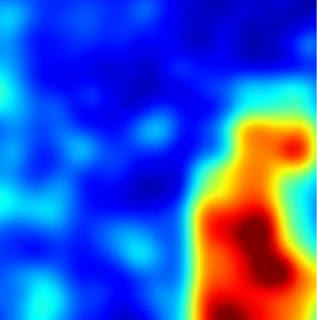
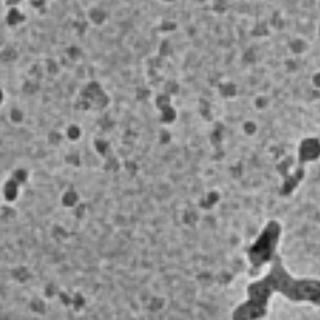
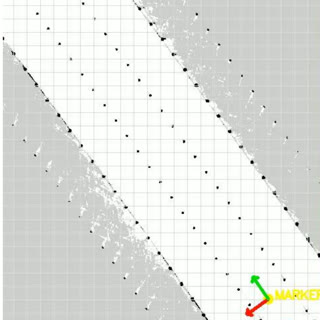
CryoAnomaly: Few-Shot Cryo-EM Particle Picking via Anomaly-Guided Hard Negative Suppression
Riku Itsuji, Rintaro Otsubo, Ryo Fujii, Xingjian Li, Xiaolong Wu, Hideo Saito, Min Xu IEEE Access, 2026 project page / paper / code / data Synthetic micrographs are clean and real ones are not, and that gap is usually what breaks transfer. We turn it into supervision: an anomaly detector trained on the clean synthetic data flags real contaminants, and a hard negative loss suppresses picks that land on them. Best precision, F1, and reconstruction resolution among the methods compared in the 1-shot setting on CryoPPP. |
|
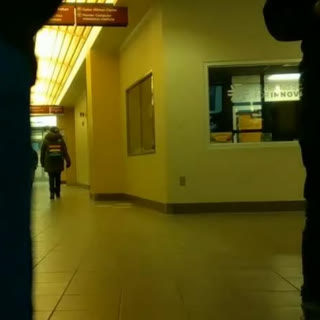
Benchmarking Social Robot Navigation in the Real World
AI Suitcase, Keio University In progress, 2026 – Social navigation policies are usually compared in simulation, by success rate, path length, and intrusion time. We run several of them — a non-social baseline, teleoperation as an upper bound, a reactive planner, and a legibility-driven one — on a real navigation robot in a busy campus corridor, collect human preferences over the paths, and ask which metrics actually track those preferences. Part of that question is whether a vision-language model can stand in for a user study. |
|
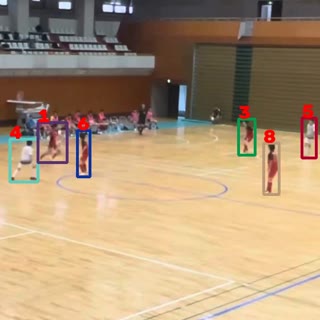
Automatic Analysis of Futsal Match Video
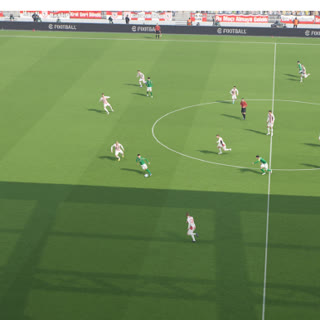
Keio University In progress, 2026 – We are building the first futsal video dataset, 100 hours of match footage from the Japanese university league. On top of it we define a task set that is both practical and new to the field: player detection and tracking, set-play clipping, substitution detection, and ball detection. The goal is a futsal-specific model, since the public models trained on soccer, basketball, and volleyball only carry part of the way. |
|
Monocular Depth Estimation 2025: Segmentation-Guided Refinement for Depth Estimation
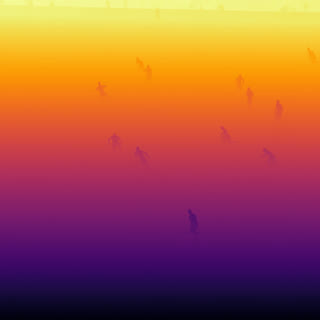
Yuto Kageyama, Riku Itsuji, Rintaro Otsubo, Kanta Sawafuji, Takuya Kurihara, Tomoki Abe, Hideo Saito SoccerNet Monocular Depth Estimation Challenge @ CVPR, 2025 (5th place) report Depth Anything V2 fine-tuned for soccer broadcast frames. Person masks from Grounded SAM 2 weight the loss on players, where the baseline produces its worst artifacts, and a field-masked smoothing step removes the curvature the reconstruction shows across a pitch that should be flat. |

|
Vocabulary Expansion for Japanese Lip Reading
Bachelor's thesis, Keio University Thesis, 2025 Japanese lip-reading datasets cover few words, so a model cannot be asked about the rest. I built a dataset for unseen vocabulary using GAN-based talking-face generation, which widens what the model can recognize and holds up better in noise. |
Experience |

|
Research Associate, Min Xu Lab, Carnegie Mellon University — Pittsburgh, Jun – Sep 2026 |

|
R&D Intern, Edge AI, Sony Semiconductor Solutions — Tokyo, Sep 2025 |

|
Machine Learning Intern, WALC (DMG MORI subsidiary) — Tokyo, Jan 2025 – Apr 2026 |
Education |

|
M.S. in Information Science, Keio University — Kanagawa, 2025 – 2027 (expected)
Hideo Saito Lab. Joint research with the Min Xu Lab at Carnegie Mellon University. |
|
|
B.Eng. in System Design Engineering, Keio University — Kanagawa, 2021 – 2025
Modeling, analysis, and synthesis of complex systems. |
|
Website template borrowed from Jon Barron. |